
Avoid costly mistakes before purchasing agricultural land or rural property in Sardinia. Independent technical assessment before investing can help identify planning, environmental and agricultural constraints that may affect the feasibility of your project.
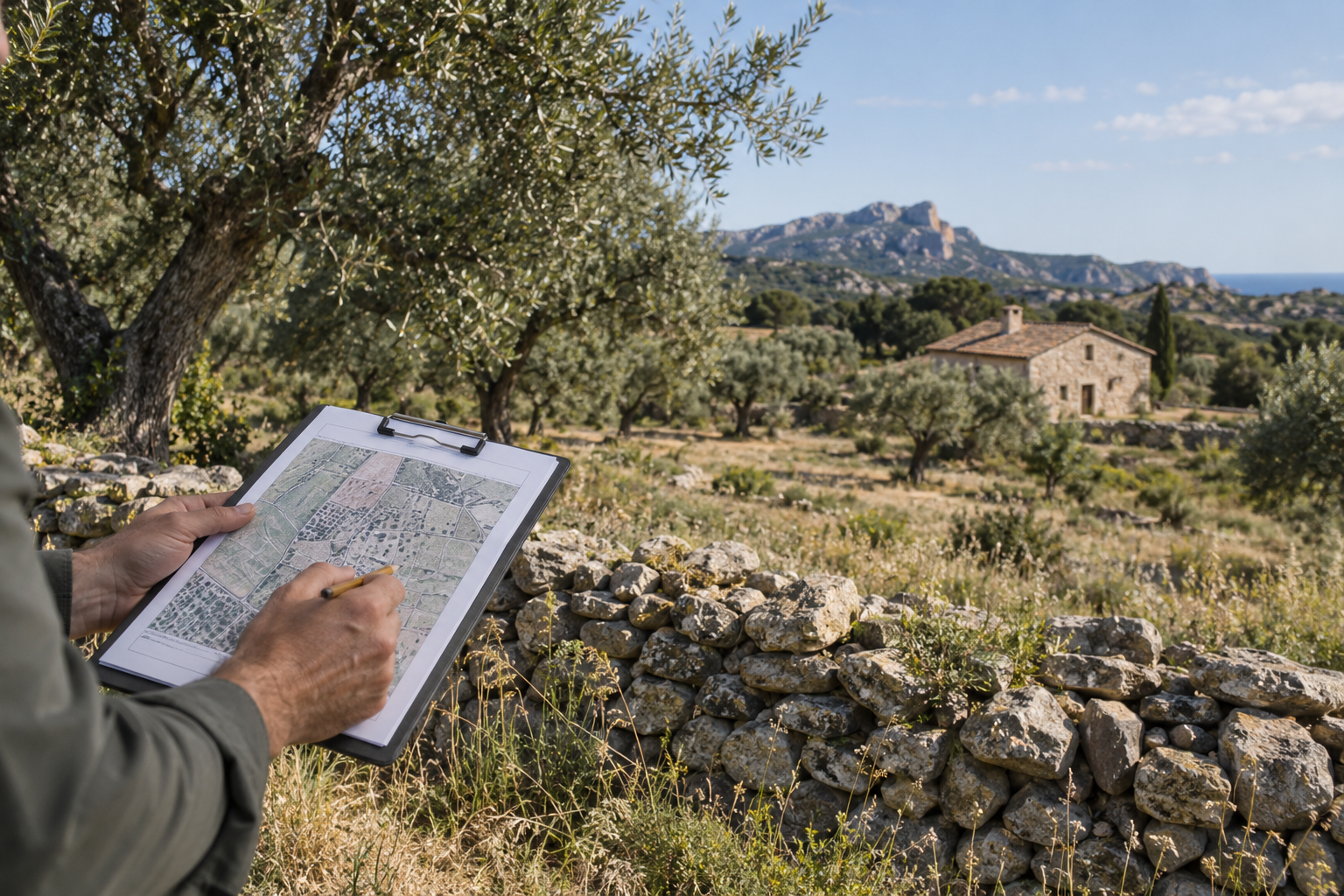
Why agricultural investments fail
Many rural investments fail not because the property is expensive, but because critical constraints are discovered too late.
A property may appear attractive, yet prove unsuitable for the intended project due to planning restrictions, environmental constraints, limited water availability, poor agricultural suitability or hidden limitations affecting its economic viability.
Before committing capital, investors should verify whether the land is actually compatible with their objectives and development plans.
What we assess
Before purchasing agricultural land or rural property in Sardinia, several technical, environmental and economic factors should be assessed.
My due diligence process focuses on identifying constraints, risks and opportunities that may significantly affect the feasibility of the investment.
Assessments may include planning regulations, land-use classification, building potential, environmental constraints, agricultural suitability, water availability, easements, civic rights, fire history and other factors that could affect the viability of the proposed project.
Planning and development potential
Verification of planning regulations, land-use classification, building eligibility and development potential.
A property may appear suitable for construction or business development while significant planning limitations remain undiscovered
Environmental and landscape constraints
Assessment of landscape restrictions, environmental designations, Natura 2000 areas, hydrogeological constraints, protected habitats and other factors that may limit future development.
Agricultural suitability
Evaluation of soil characteristics, land capability and agricultural suitability in relation to the proposed project. A property may be legally available for purchase yet remain unsuitable for the intended agricultural activity.
Access, Infrastructure and Utilities
Assessment of the infrastructure and utility services available on or near the property. This includes road access, electricity supply, water resources, irrigation potential, wells, reservoirs and other essential facilities that may influence the feasibility, costs and development potential of the investment.
Property limitations and hidden risks
Identification of factors that may reduce the effective value or usability of the property, including inaccessible areas, steep slopes, rocky surfaces, easements, civic rights, fire restrictions and other hidden constraints.
Project viability assessment
The objective is not only to assess the property itself, but also to determine whether the proposed investment is realistically achievable under local conditions, regulations and economic constraints.
The property is analysed in relation to the investor’s objectives, helping identify potential obstacles before significant capital is committed.
How the due diligence is carried out
The assessment begins by defining the property boundaries, the intended use and the investor’s objectives. Available cadastral records, title documents, easements, existing permits and authorisations are then reviewed to identify inconsistencies or matters requiring further verification.
Planning and landscape checks may include the applicable Municipal Urban Plan (PUC), the Regional Landscape Plan (PPR), protected areas, land-use restrictions, building eligibility and development potential. Environmental analysis may also consider hydrogeological risk, flood-prone areas, soil characteristics, water resources and irrigation availability.
Existing rural buildings, road access, internal connections, utilities and possible recovery options are assessed together with the agronomic potential of the land, including soil fertility, climate and microclimate, current land use, expected productivity and economic feasibility for the proposed activity.
The findings are brought together in a clear technical assessment identifying critical issues, risks, possible corrective measures, recommended next steps and any further authorisations or specialist investigations required.
Where legal, cadastral, geological, engineering or other specialist verification is needed, the relevant matters are coordinated with or referred to the appropriately qualified professional.
Who this service is for
This service is intended for foreign investors, land buyers, future farmers, agritourism entrepreneurs and individuals considering the purchase or development of rural property in Sardinia.
It is particularly valuable when significant investment decisions depend on planning feasibility, agricultural suitability, water availability or regulatory compliance.
Why start with a feasibility assessment?
Rural investments often require the involvement of different professionals, including surveyors, architects, engineers, lawyers and accountants.
However, before engaging multiple specialists, it is advisable to determine whether the proposed project is realistically achievable.
A preliminary feasibility assessment helps identify major constraints, opportunities and critical issues at an early stage, allowing subsequent professional activities to be focused only where they are genuinely needed.
What you receive
Depending on the project and available information, the assessment may include:
• Preliminary feasibility analysis
• Identification of planning and environmental constraints
• Agricultural suitability assessment
• Water availability review
• Risk assessment and critical issues identification
• Strategic recommendations for further development
The objective is to provide a clearer understanding of the opportunities, limitations and risks associated with the proposed investment before major commitments are made.
Related Resources
Can You Build on Agricultural Land in Sardinia?
Contact
If you are considering the purchase of agricultural land or rural property in Sardinia, a preliminary discussion can help determine whether a feasibility assessment is appropriate for your project.
For enquiries, please visit the Contacts page or get in touch directly.
Due diligence in practice
In one real assignment, the land shown during the viewing did not match the property actually offered for sale. Independent checks of boundaries, planning constraints, infrastructure, soils and effective usability showed that the asking price was not justified, and the foreign buyer decided not to proceed.
Read the complete due diligence case, see the integrated acquisition-support case, or view all case studies.