
When purchasing agricultural land in Sardinia, understanding the applicable planning and landscape restrictions is one of the most important aspects of the evaluation process.
Many buyers assume that a rural property can automatically be developed or used for any agricultural project. In reality, the feasibility of an investment depends on a combination of planning regulations, environmental legislation and site-specific constraints that must be assessed before the purchase.
A comprehensive evaluation helps identify both opportunities and limitations, allowing buyers to make informed decisions and avoid unexpected complications after acquiring the property.
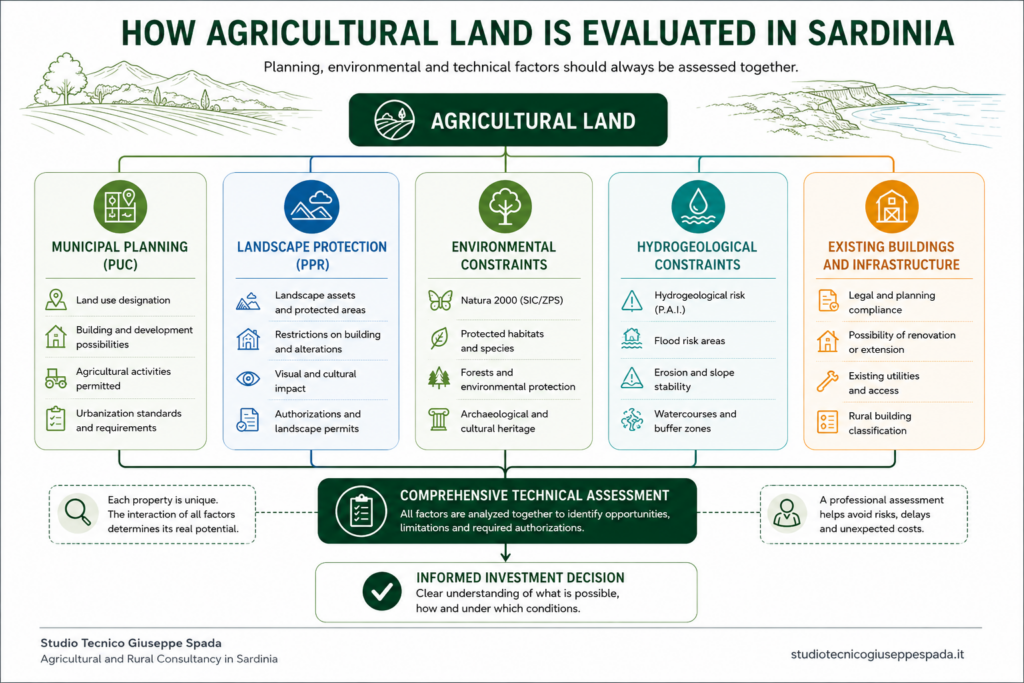
Municipal Planning Regulations
Every municipality in Sardinia is governed by its own planning instruments, which regulate how land may be used and developed.
The planning designation of a property influences the types of agricultural activities that may be carried out, the possibility of constructing new buildings and the conditions under which development may be permitted.
Landscape Protection
Many agricultural properties are affected by landscape protection measures intended to preserve the environmental and cultural heritage of Sardinia.
One of the principal planning instruments is the Regional Landscape Plan (Piano Paesaggistico Regionale – PPR), which applies to extensive areas of the island and may influence future development.
Understanding how these provisions apply to a specific property requires a case-by-case technical assessment.
Environmental Constraints
In addition to planning regulations, agricultural land may be affected by environmental protection measures relating to forests, watercourses, protected habitats, Natura 2000 sites and other environmentally sensitive areas.
These constraints do not necessarily prevent agricultural activities, but they may influence future land use and development.
Hydrogeological Constraints
Certain areas are subject to hydrogeological regulations intended to reduce risks associated with flooding, erosion or slope instability.
These provisions may affect the feasibility of construction works or other land improvements.
Existing Buildings
Where rural buildings are present, their legal and planning status should always be verified.
The existence of a building does not automatically mean that it complies with current planning regulations or that it can be renovated or extended without further assessment.
Why a Comprehensive Assessment Is Essential
Planning regulations, landscape protection, environmental legislation and local planning instruments should never be considered individually.
Each property is unique, and its development potential depends on the interaction of multiple regulatory frameworks as well as its physical characteristics.
Because planning regulations, landscape protection and environmental constraints often interact, an independent Agricultural Due Diligence provides buyers with a comprehensive assessment of the property’s opportunities and limitations before completing the purchase
The value of agricultural land cannot be assessed solely by considering its location or purchase price.
Understanding the planning and landscape context is an essential part of evaluating any rural investment in Sardinia and helps ensure that future decisions are based on reliable technical information rather than assumptions.
Considering a rural property in Sardinia?
Send me the property location or listing and a short description of your plans. I can help identify which technical checks are appropriate before you buy.
Discuss your property or project
Related advice: Pre-Purchase Rural Property Inspection in Sardinia · Rural Property Due Diligence in Sardinia: When the Right Advice Is Not to Buy.